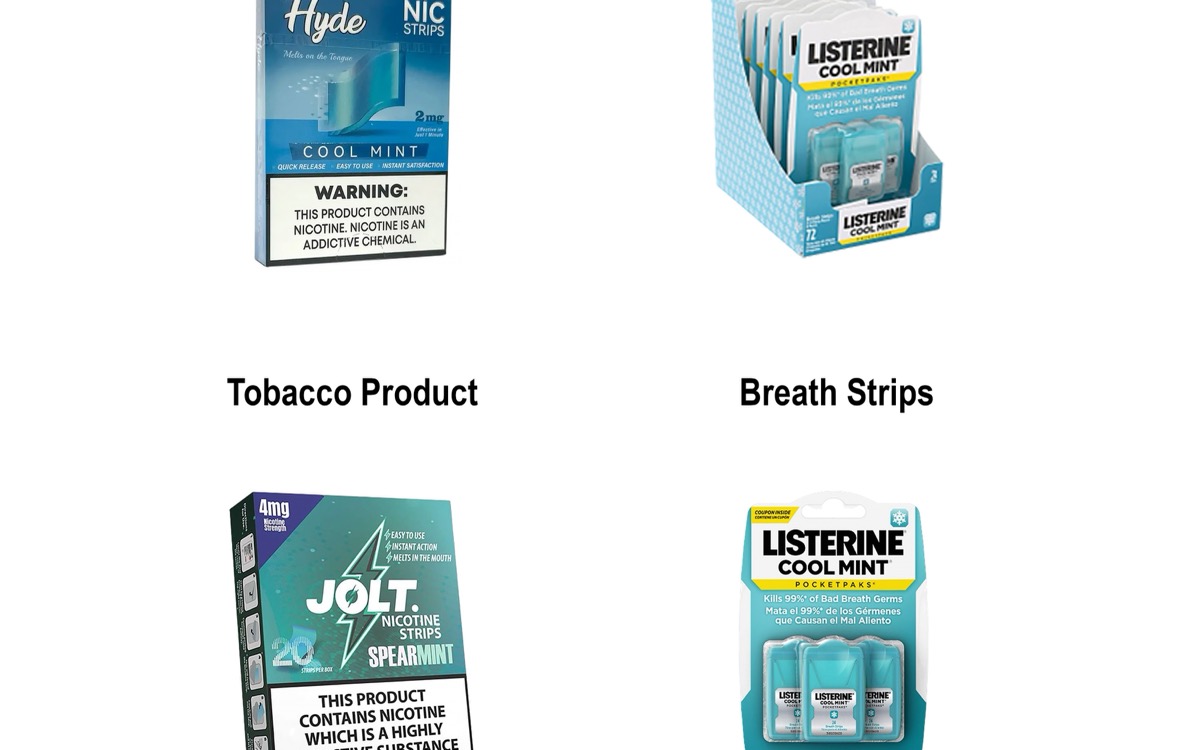
Quick answer: FDA’s everyday tobacco products warning says several unauthorized tobacco products were sold in formats that can resemble candy, breath strips, cough drops, or other familiar goods. VapeRisk reads this as a packaging and retail-screening risk signal: product appearance can become an enforcement issue even before buyers evaluate ingredients or performance claims.
| Field | Detail |
|---|---|
| Event | FDA warning letters to retailers selling unauthorized tobacco products that look like everyday products |
| Date | May 20, 2026 |
| Agency | FDA |
| Products shown | Nicotine strips, pouches, and other tobacco products compared with common consumer goods |
| Buyer relevance | Look-alike packaging can confuse shoppers and increase youth-appeal concern |
| Retailer relevance | Retail intake should include packaging review, authorization checks, and age-gate procedures |
What happened
FDA announced warning letters to eight retailers for selling unauthorized tobacco products, including nicotine pouches and dissolvable tobacco products. The agency highlighted products that look like everyday items and published a sample-pairs image comparing tobacco products with candy, breath strips, and cough drops.
The agency’s concern is not only whether a product is authorized. It is also whether the packaging format could be accidentally ingested by young children or appeal to youth by resembling familiar non-tobacco products.
Why the FDA everyday tobacco products warning matters
Many vape and nicotine-category products compete through flavor, color, portability, and format. Those same features can become regulatory risk when a product looks too much like a snack, mint, cosmetic, toy, or wellness item.
For VapeRisk readers, the useful lesson is broader than the specific products in the FDA release. Retailers need to review presentation, not just nicotine strength and puff-count claims.
VapeRisk risk read
Packaging is part of the risk profile. A product can have a nicotine warning and still create confusion if its form factor mimics a common consumer product. VapeRisk would treat “discreet,” “candy-like,” “mint-like,” or “looks like everyday carry” marketing as claims that deserve extra scrutiny.
What buyers or retailers should watch
- Product names or graphics that closely resemble candy, gum, breath strips, or cough drops.
- “Discreet” product formats that reduce the chance that adults around a minor recognize the item.
- Packaging that emphasizes flavor while authorization status remains unclear.
- Supplier claims that ignore FDA authorization and warning-letter history.
What remains unverified
The FDA release does not prove that every similar-looking product is unlawful. It also does not settle trademark or packaging-law questions. It does show that product appearance is part of FDA’s enforcement risk lens.
Related VapeRisk Coverage
- Why vape product claims need verification
- How to read a vape product label
- How to spot a counterfeit vape product
FAQ
What is the FDA everyday tobacco products warning?
The FDA everyday tobacco products warning is a May 20, 2026 enforcement announcement about unauthorized tobacco products sold in forms that can resemble ordinary consumer goods.
Are the products in the FDA image vapes?
Not all of them are vapes. The FDA example includes nicotine pouches and dissolvable tobacco products, but the packaging-risk lesson applies across nicotine retail categories.
What should retailers do with look-alike products?
Retailers should review look-alike products for authorization status, youth-appeal risk, clear nicotine warnings, supplier documentation, and age-gated sales procedures.